
“We currently live in a paradigm of fake identities, fake content on screen and now fake representations of culture. Is anything sacred anymore?” Ella Noah Bancroft (Bundjalung artist)
Quote from this article where Ella Noah Bancroft explores the damaging impact when fake Aboriginal art stars on the set of the latest Netflix drama ‘After Life’
An art form as old as civilisation itself
I consider myself hugely lucky to of had first hand experience exploring this magnificent country and some of the sacred and culture rich Indigenous treasures it stores for us. From the Larrakia (Darwin region) to Woiwurrung (Melbourne region) and from Wajuk (Perth region) to Bundjalung (Gold Coast region) and all that is in between, the land is literally filled with Indigenous art, culture, history and teachings.
And what I’ve seen first hand leads me to better appreciate the importance of Indigenous culture and art (and the preservation of them).
A recent genomic study suggest that Aboriginal Australians are the oldest known civilisation on Earth, with ancestries stretching back roughly 75,000 years. Given the vast history, whether considering the remnants of artefacts left behind or the teachings passed down over generations to the artists of today, it would be hard to deny the importance of preserving and protecting this art form.
The symbols and symbols of aboriginal art are as diverse as they are old. The oldest known aboriginal art in Australia is approximately 60,000 years old. And while there have been many forms of aboriginal art since that time, a few traditional meanings remain constant. The red ochre paintings of ancient aboriginal cultures signified blood; yellow ochre symbolized sand or sunlight; white paint meant water. Black dot patterns often represented stars, ancestral desert tracks and or body parts while lines signalled waterfalls, rivers or landscapes.
Ninbella.com
Humans, Generative AI and Indigenous art
Even in these early days of public generative AI image creation tools, it’s easy to see that the various AI neural networks (Dalle-2, Stable Diffusion etc) have consumed enough information to do a good job of mimicking Indigenous art. Below are some quick examples of where AI is at today.
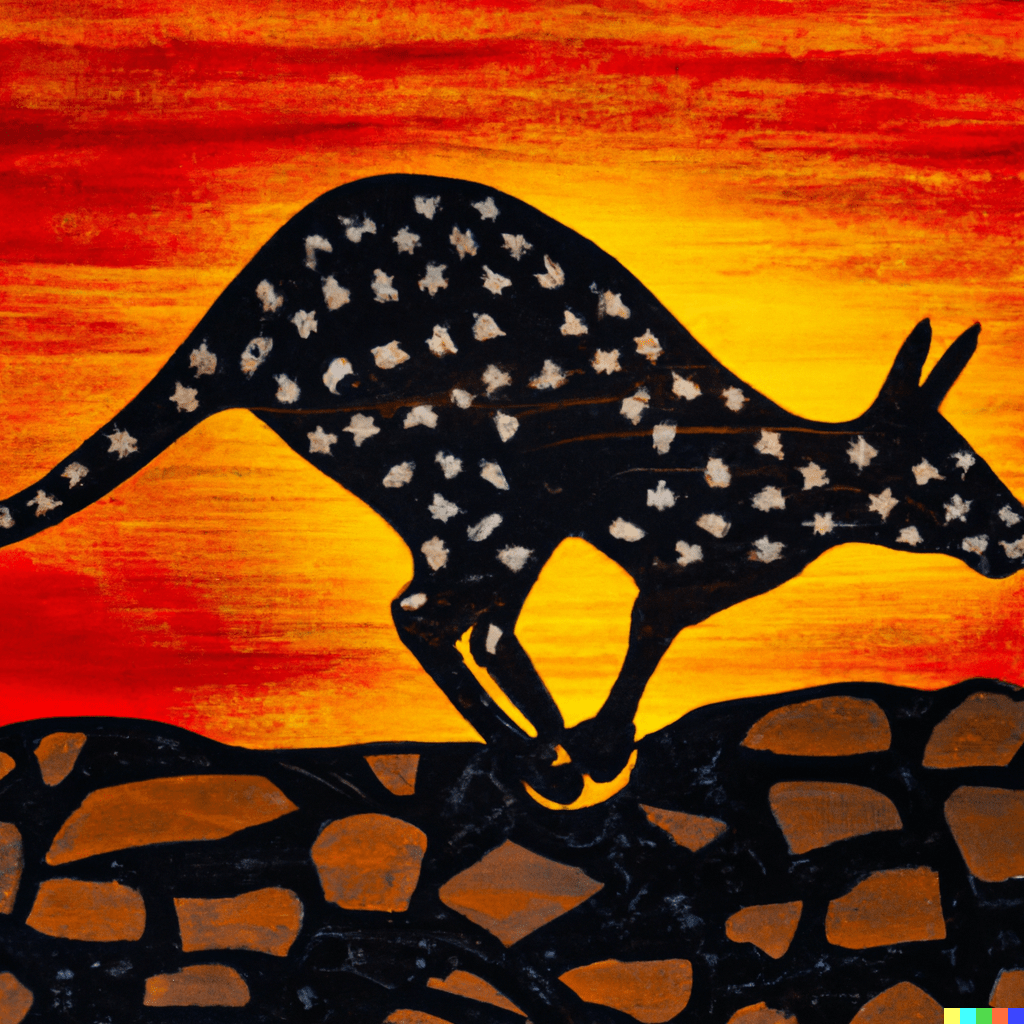
Prompt inspired by my trips to Central Australia
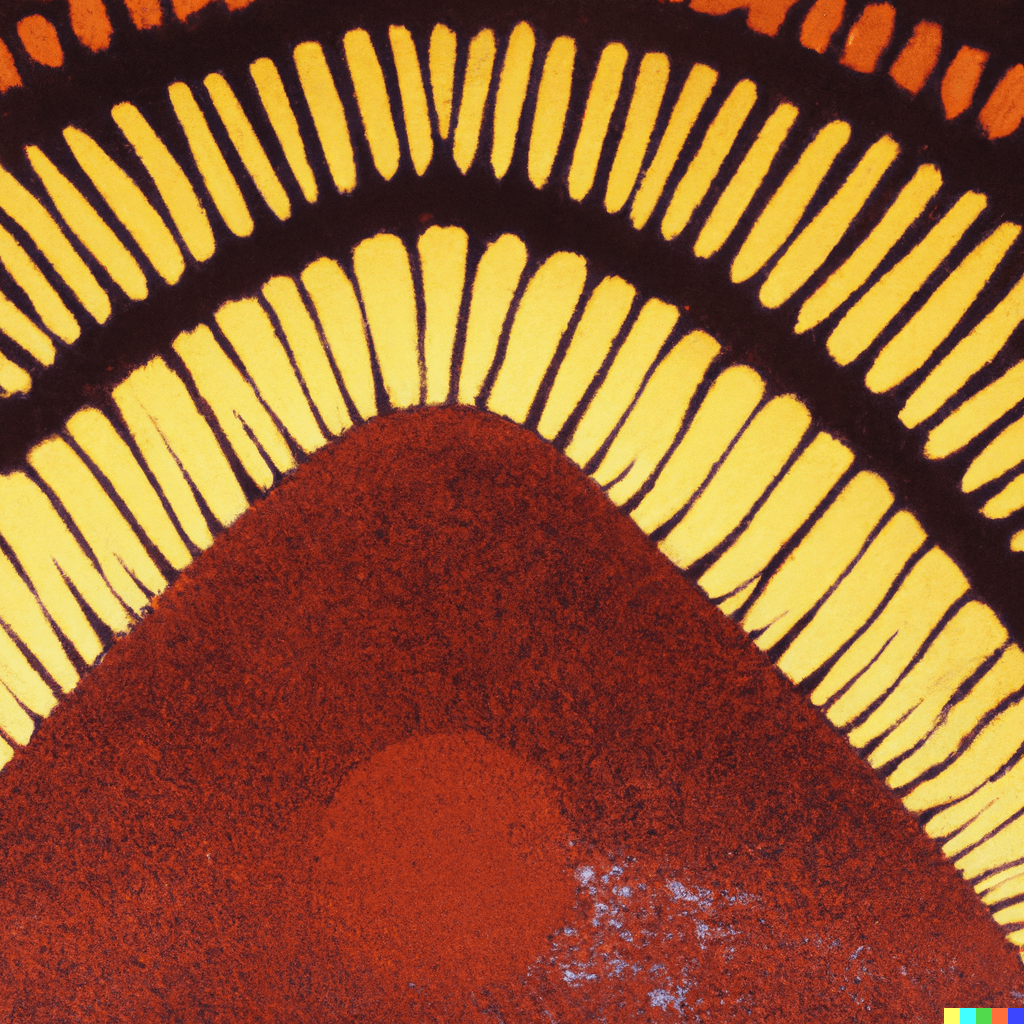
Prompt inspired by trips to magnificent Uluru
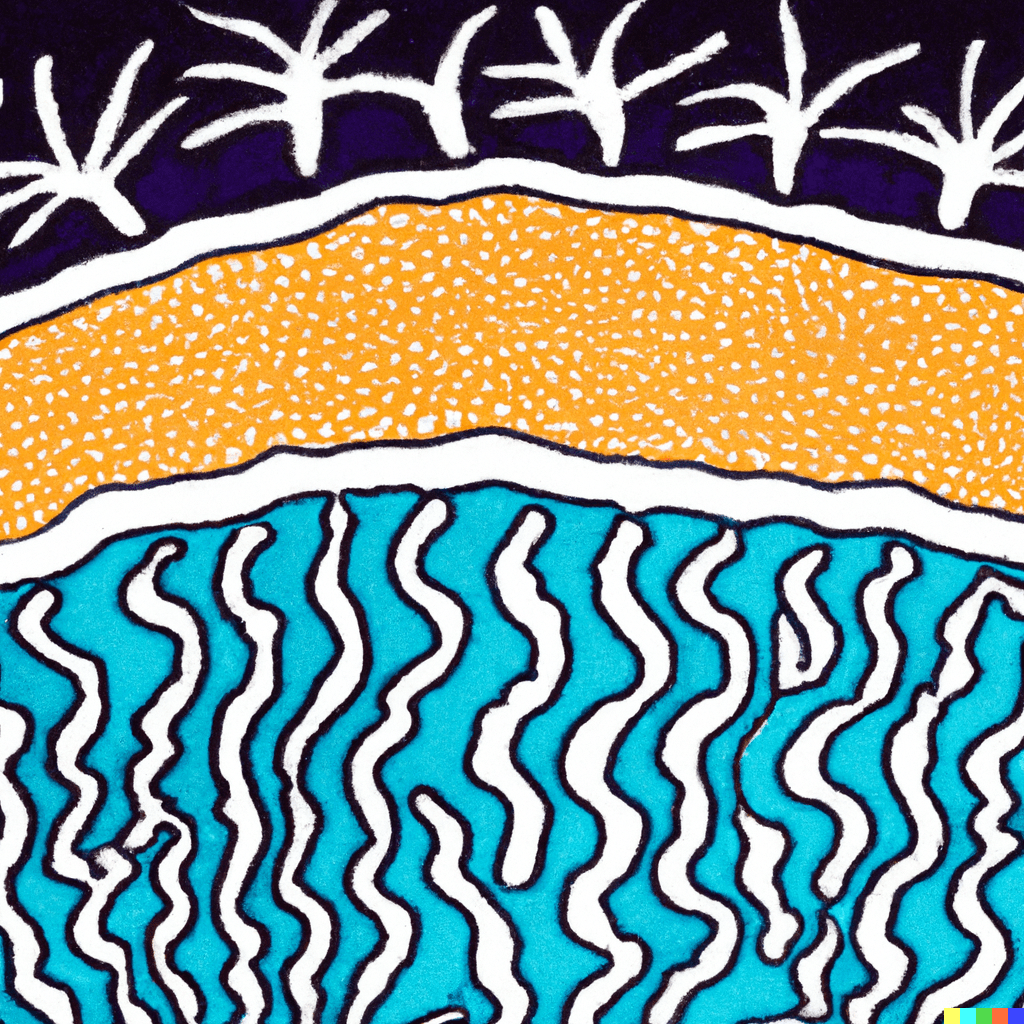
Prompt inspired by the many beaches of Australia
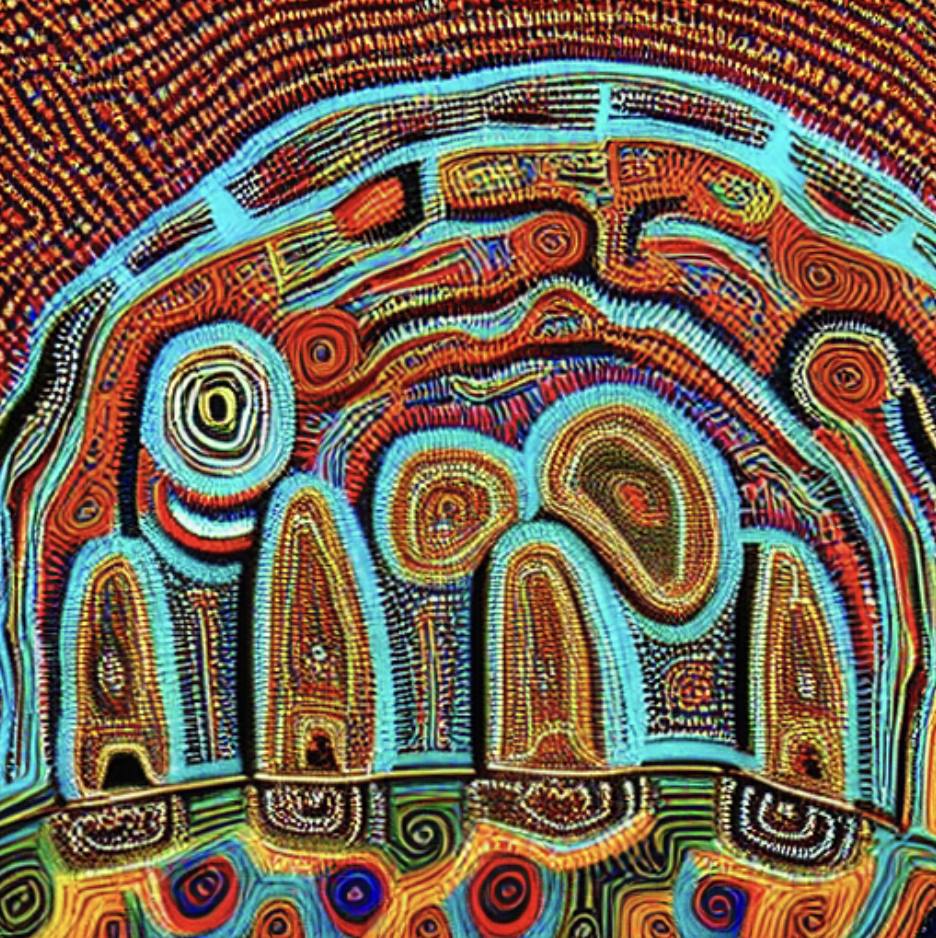
Prompt inspired by the Bungle Bungles region in WA
It doesn’t seem unreasonable to say that AI will soon be able to produce indistinguishable replicas of Indigenous art works.
Between the high price associated with the purchasing an original Indigenous artwork and the fact that humans are hard wired to be lazy, it seems inevitable that AI generated Indigenous art could soon become a thing.
Will AI generated indigenous Australian inspired art galleries even be avoidable?
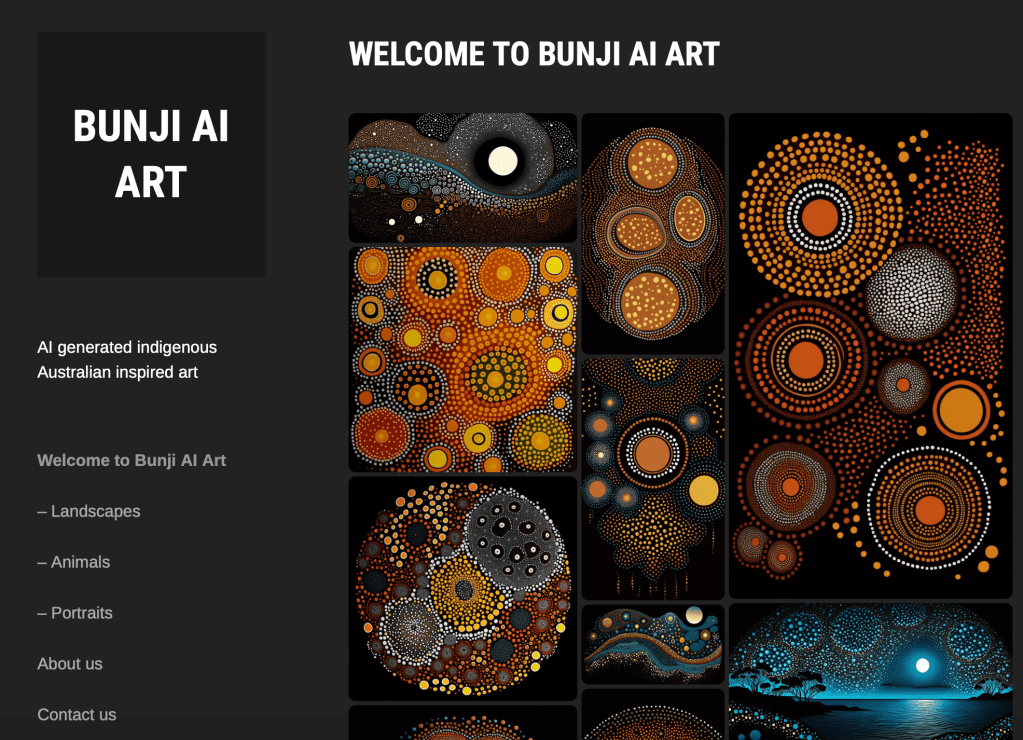

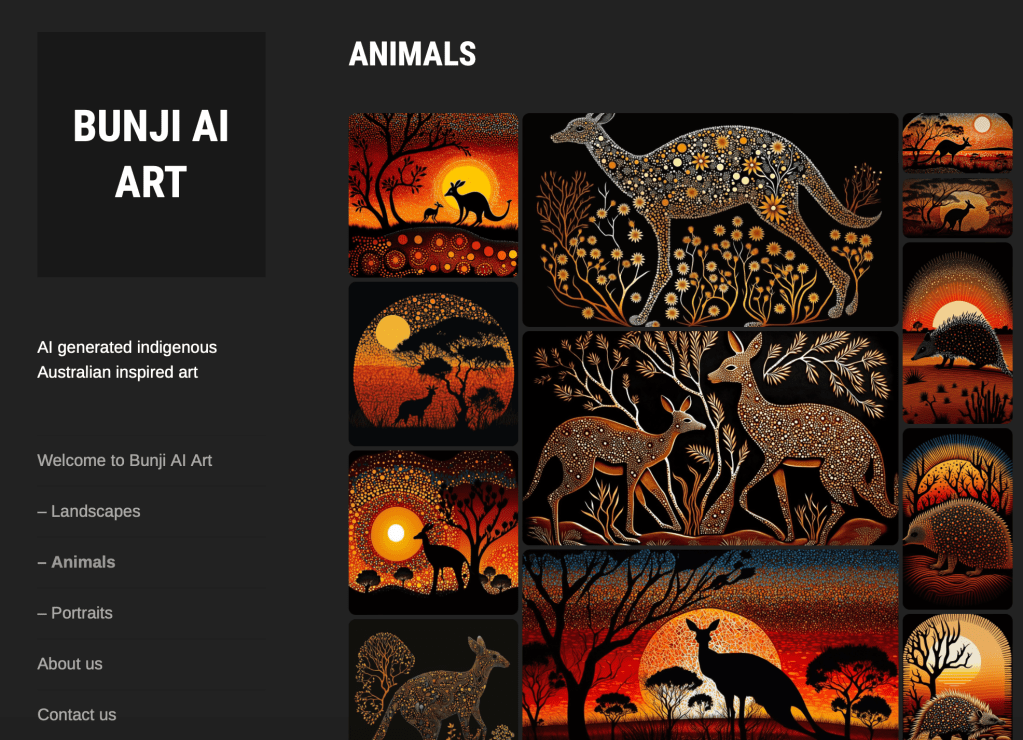

Diamonds are were forever too
Indigenous art being replicated by AI is not the first time in modern history where a traditionally highly scarce, difficult to source product (which is therefore highly sought after and valuable) has been disrupted through technology and science bringing cheap mass commoditisation to the equation.
The lab-grown diamond market is an example of this, with the technology and process now making mass production a real option. And it’s a fast growing business globally where according to research from Markets and Markets 70% of millennials have considered buying lab-grown diamonds for an engagement ring to tackle the negative social and environmental effects associated with minded diamonds.
As many as one in five engagement rings sold for under $10,000 in Australia features a grown stone
Rami Baron, President Diamond Dealers Club of Australia
So how does one distinguish between lab grown and land sourced diamonds? The experts will say it’s in the diamond, that whilst indistinguishable to the untrained eye, that experts can tell the difference (ironically it’s apparently to do with the lack of imperfection in lab grown).
But for consumers there is only one way currently to distinguish between lab grown and land sourced diamonds and this is known as SCS-007.
SCS-007 is a sustainability standard for the diamond and jewellery market. It was developed in 2021 and it “assesses a producer’s adherence to social responsibility and governance, environmental, and sustainable practices criteria, a stone’s traceability, occupational health and safety for workers, and truthfulness and transparency in public claims.” as noted in this recent article.
A complex set of issues
The issues highlighted by the ease of which generative AI can replicate Indigenous art are multiple.
- Was AI given permission to learn from wherever it’s sources are?
- Does AI engage in cultural misappropriation when it creates an Indigenous themed output?
- Does this open up a whole new unethical market?
- Should this (and if so how) should this be controlled?
- What is the role of Government here?
In the name of progress
Undoubtedly some (many?) will say this evolution of AI producing Indigenous art as just progress. Unfair as it might be, built off the learnings of ancestors and catapulting us into an unknown world where there may be more AI artists than humans, some will inevitably embrace the new.
Whilst others will lament what they say is the dilution and abuse of the very essence of the art form.
Much as some might lament generative AI replicating Indigenous art, this is not the first time that Indigenous art has evolved in modern times. Yama Harradine, a Wotjobaluk artist for example is mixing traditional Indigenous art styles with manga and anime. If humans can evolve the art form, why then can generative AI not be considered progress?
Where to from here?
As for the way forward, who knows, but what is for sure is that this is AI art is fast emerging space and it’s unlikely to stop.
Perhaps soon artists to be able to train their own neural networks and leverage AI to allow them to create new art using their own styles. Perhaps standards will dictate and force certain outcomes.
 Ontologic